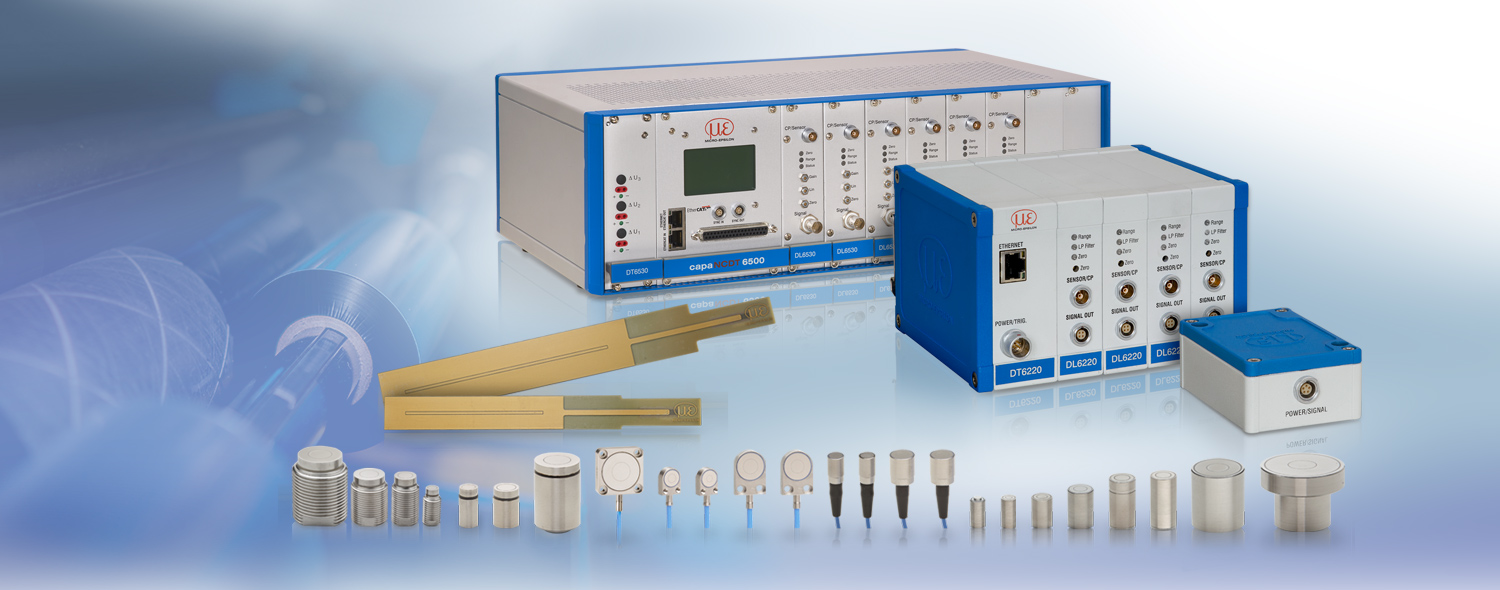
Capacitive sensors for high-precision distance measurements
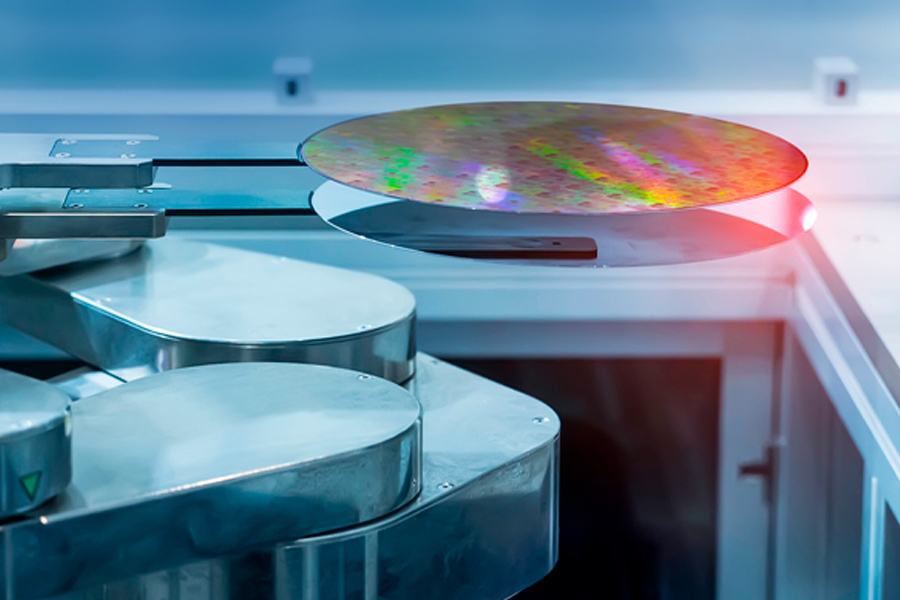
Capacitive sensors are used for high-precision distance measurement with maximum signal stability. As a technology leader with the world's most powerful product range, Micro-Epsilon offers solutions for numerous measurement tasks. Due to their compact and robust design as well as a wide range of customization options, these systems can be flexibly integrated into various industrial applications – from high-precision machine control in the semiconductor industry to continuous process monitoring in battery production.
Micro-Epsilon - the reference for capacitive precision measurement technology.

Characteristics
- High-precision measurement of displacement, distance, gap and thickness
- Highest resolution up to 30 picometers
- Suitable for all electrically conductive targets
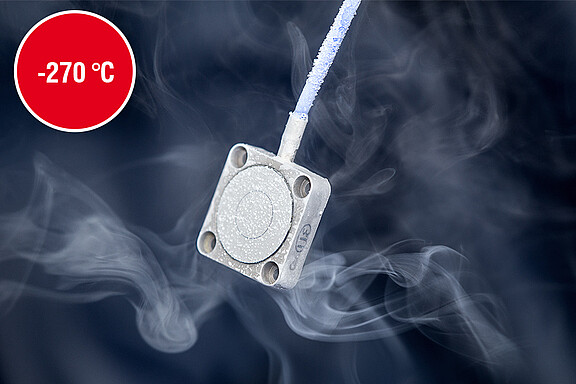
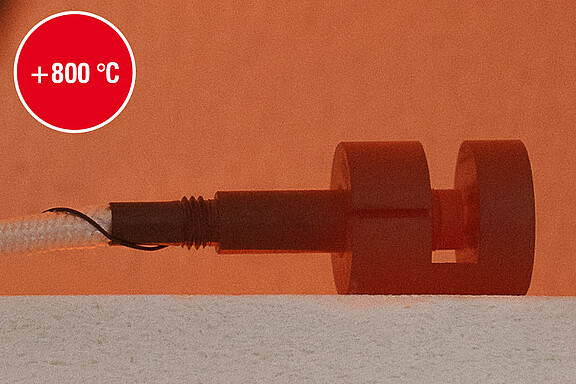
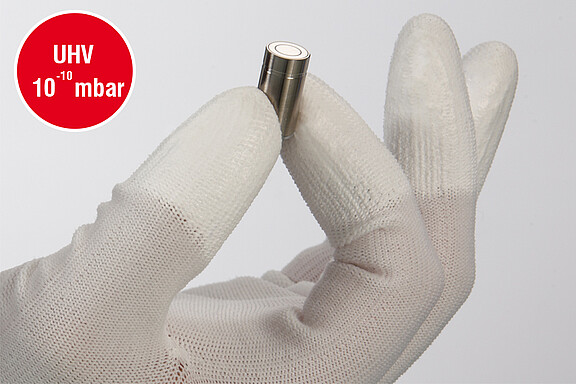
- Suitable for challenging conditions: -270 to +800 °C or UHV
- Extremely stable under fluctuating temperatures
- State-of-the-art product portfolio for a wide range of applications
- Optimized sensors and controllers for OEM series applications

More precision for measuring distance, thickness and gaps
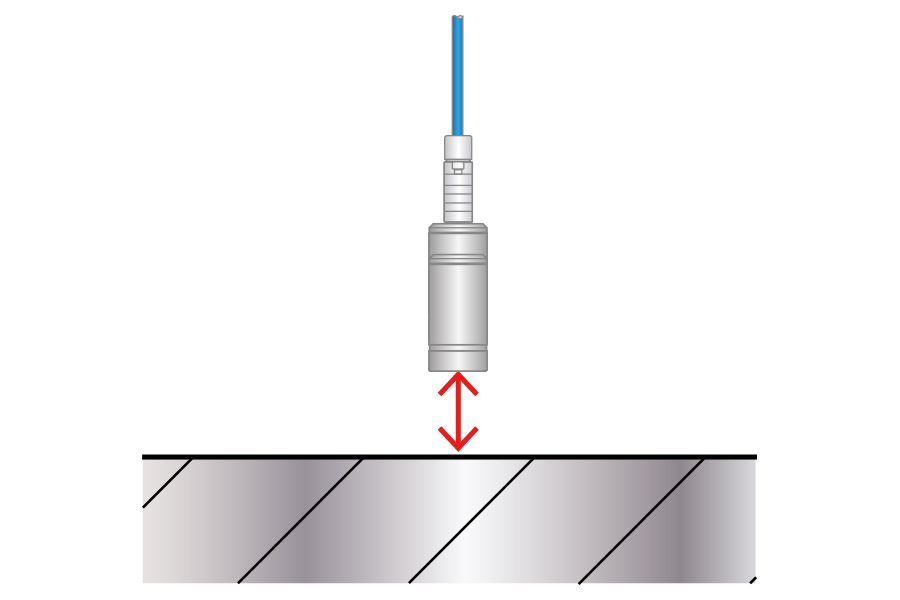
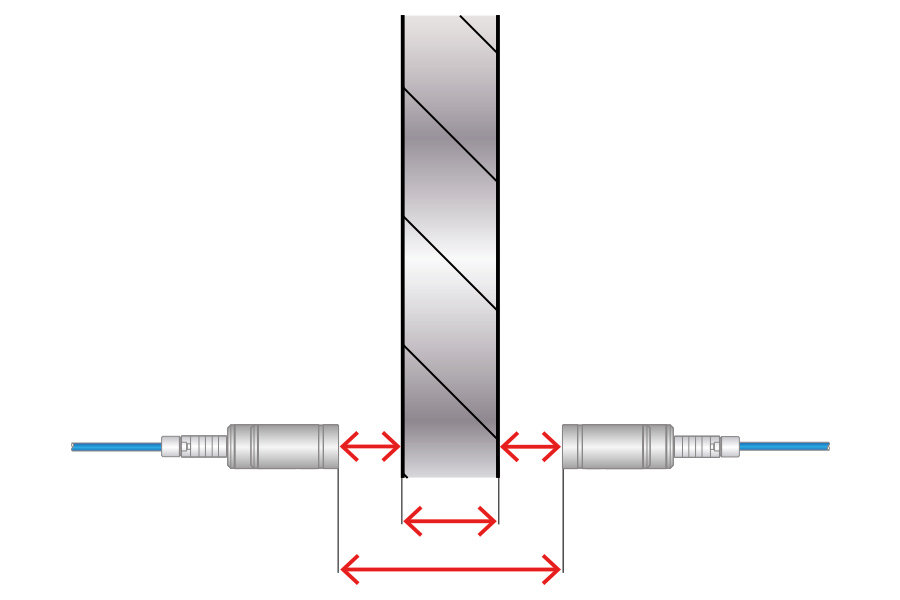
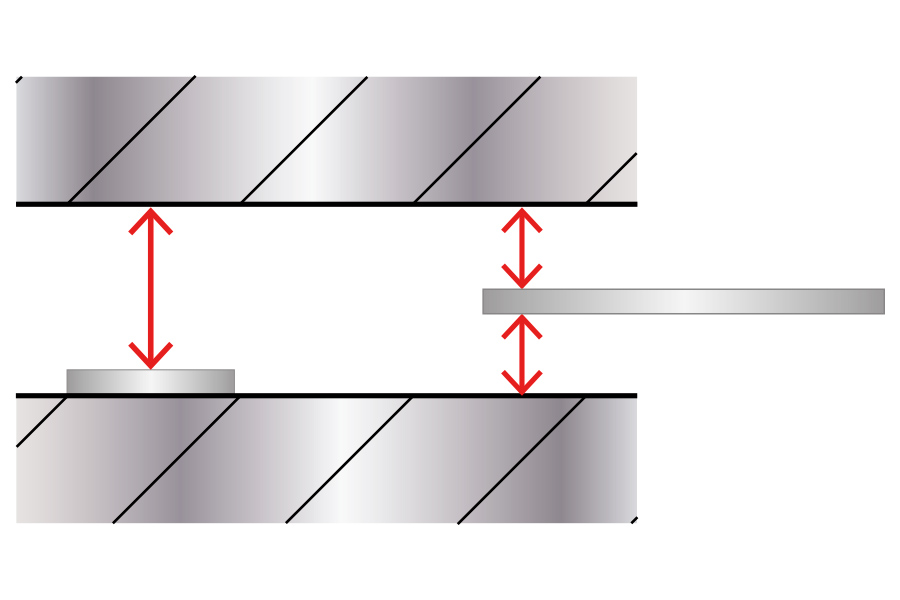
0.00000003 mm | Precision that sets new standards
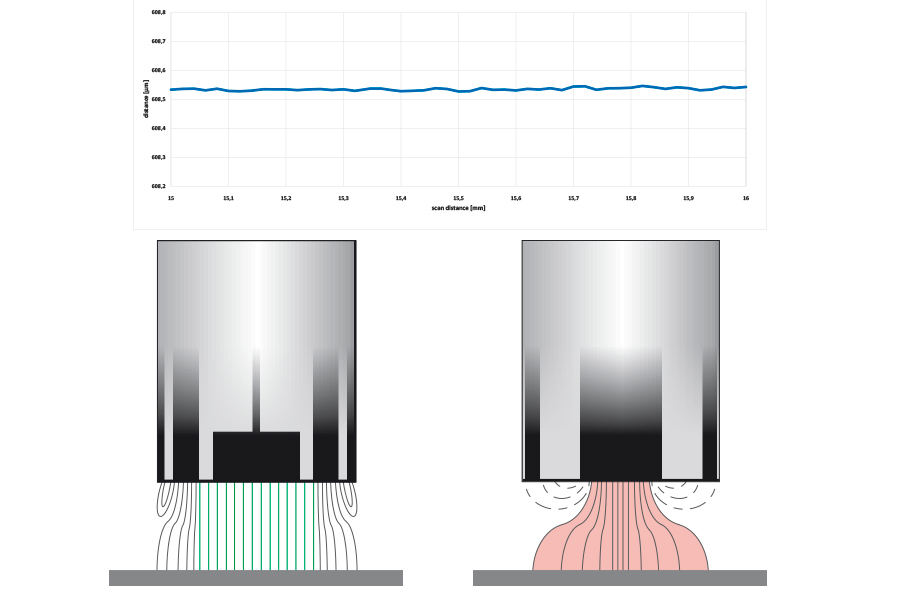
Capacitive sensors achieve resolutions of up to 30 picometers. This allows the smallest changes in distance to be detected. With a linearity of just 80 nanometers, the sensors achieve unsurpassed accuracy combined with maximum stability.
Low-noise technology for maximum signal stability
Capacitive sensors from Micro-Epsilon stand for maximum signal stability and highest measurement precision, even in demanding applications. The integrated low-noise technology combines a triaxial sensor design with electrically shielded sensor cables. This effectively minimizes interference while enabling particularly stable and low-noise measurement signals.
An additional advantage is that the sensors can be in contact with each other for multi-channel measurements, making particularly compact sensor arrangements possible. In addition, the sensors are short-circuit-proof for increased operational safety.
Precision in any environment – from the cleanroom to the production line
- Special sensor design for maximum signal stability
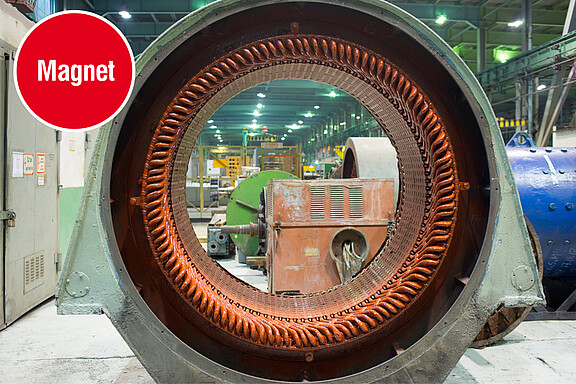
- Temperature-stable and non-magnetic materials such as Invar, titanium or special alloys (e.g. Inconel)
- Particle-free and low-outgassing sensors, cleanroom-compatible clean cables
- No interaction with the environment, e.g. through mechanical force or heat transfer
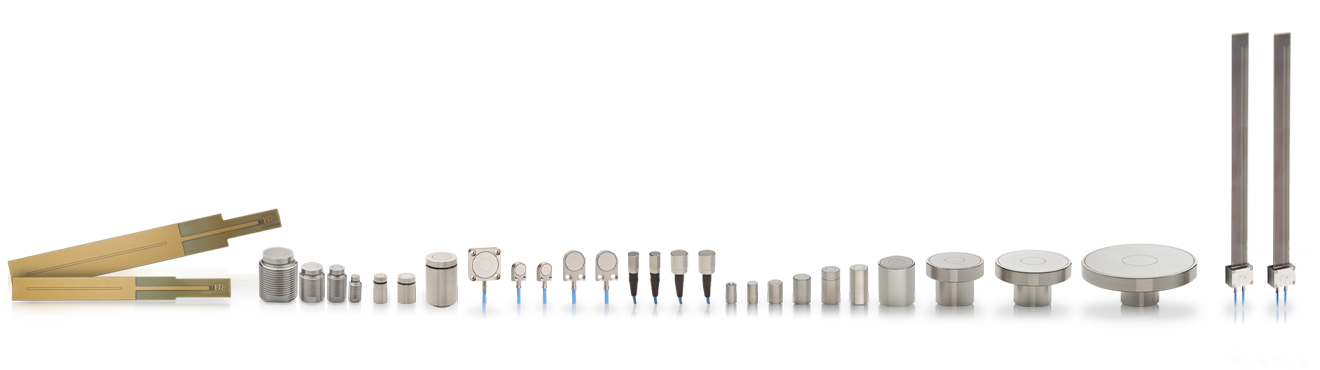
Full compatibility: largest variety of combinations worldwide
With capaNCDT you benefit from maximum flexibility, full compatibility and maximum precision. Sensors, cables and controllers are fully compatible with each other and can be exchanged quickly and easily, even when switching to other measuring ranges. This means that sensors can be replaced directly on site in just a few seconds, reducing downtimes to a minimum. For applications with high accuracy requirements, the LC adjustment optimizes linearity. The result: maximum flexibility combined with maximum operational safety.
Compact and easy to integrate
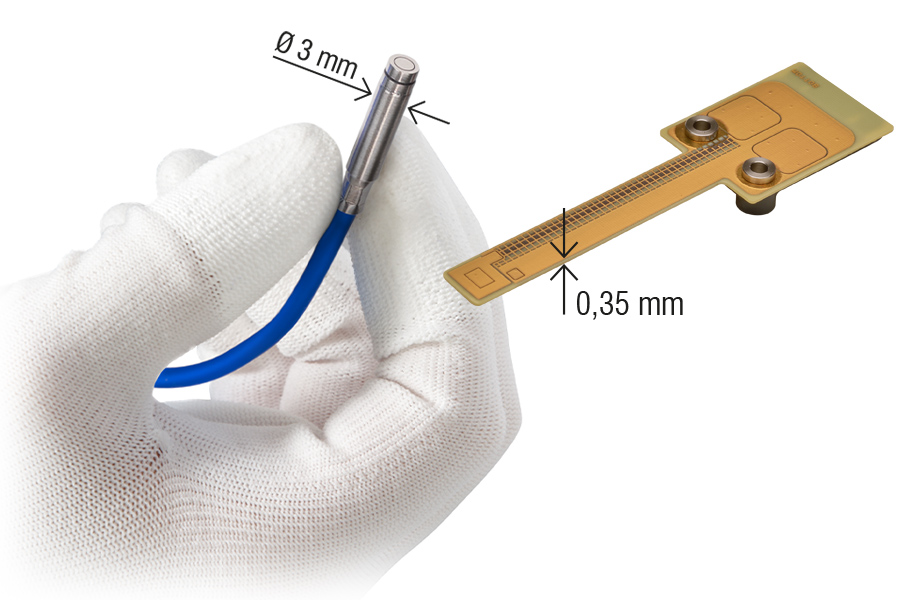
Due to their special design, the ultra-compact capacitive sensors from Micro-Epsilon are particularly easy to integrate into machines or retrofit into existing systems. Seamless integration into existing automation environments is enabled by flexible industrial interfaces that support current and voltage outputs, RS485, Ethernet, and fieldbuses.
The robust sensor and cable assembly as well as a carefully considered installation concept ensure fast and safe commissioning. For applications with high hygiene standards, the CSF models also offer easy-to-clean sensor surfaces and flexible, bendable PCB sensors for particularly space-critical installation situations.
How capacitive sensors work
Capacitive sensors are based on the detection of a change in capacitance. With a plate-type capacitor, the capacitance between two plates of constant size can be changed by altering their distance or by placing a dielectric in the measuring gap. The sensor (measurement electrode) and the conductive measuring object act like an ideal plate-type capacitor. If an alternating current of constant frequency flows through the sensor capacitor, the amplitude of the alternating voltage on the sensor is proportional to the distance to the target (ground electrode). To ensure consistent measurements, the dielectric constant between the sensor and the object being measured must remain constant.
Fields of application